A valley collects water where roof slopes meet; an abutment is where the roof meets a wall or other rising construction. Their weathering depends on the relationship between the covering, channel or soakers, and flashings.
Compare common British arrangements and learn why a soaker and a cover flashing have different jobs. Then use the chimney photograph to connect component names to a real junction.
Locate the junction before naming the detail
A valley is the internal angle where two inclined roof surfaces meet; a hip is the external angle. Following that distinction prevents an apparently similar diagonal roof line from being given the wrong name. Roof Tile Association, technical glossary.
An abutment is where the roof meets a wall. At a side abutment, that junction follows the roof slope. At a top abutment, it crosses the head of the roof. Marley illustrates these locations and several distinct weathering arrangements; one visible strip should not be assumed to represent every layer. Marley, Roofing Sitework Guide, printed pp. 25–28.
| Location | First useful description | Follow-up question |
|---|---|---|
| Valley | Roof slopes feeding it, visible channel or covering arrangement, lower termination | Can the route from its head to the receiving gutter be traced? |
| Side abutment | Wall side, covering, stepped or other visible weathering | Which parts are visible and which remain concealed? |
| Top abutment | Head of roof, wall surface, apron and adjacent upper courses | What evidence identifies the complete junction arrangement? |
Use the table as a proposed description framework. It is not a list of approved details.
Three valley arrangements to distinguish
Open channel. An exposed trough remains between the cut edges of the coverings. Its appearance alone does not establish the material: manufacturers also supply open GRP valley products. Close-cut proprietary valley. The visible gap may be much narrower, while a shaped trough remains beneath the covering edges. Marley's range includes these different appearances; its product terminology should not be treated as a classification of every historic roof. Marley, lead valleys and alternatives.
Purpose-made valley tiles. These continue the tiled covering through the internal angle. The equal-pitch arrangement in Marley's plain-tile detail is a particular application, not authority to use those fittings at any combination of slopes. Marley, printed p. 49.
For a survey, describe the visible arrangement first. Then establish the actual system from accessible evidence, records or a suitable closer inspection. Ask what happens at the head, any change of direction and the lower outlet. A neat-looking central run does not answer questions about its terminations. Do not borrow a channel width, lap or fixing arrangement from a different product.
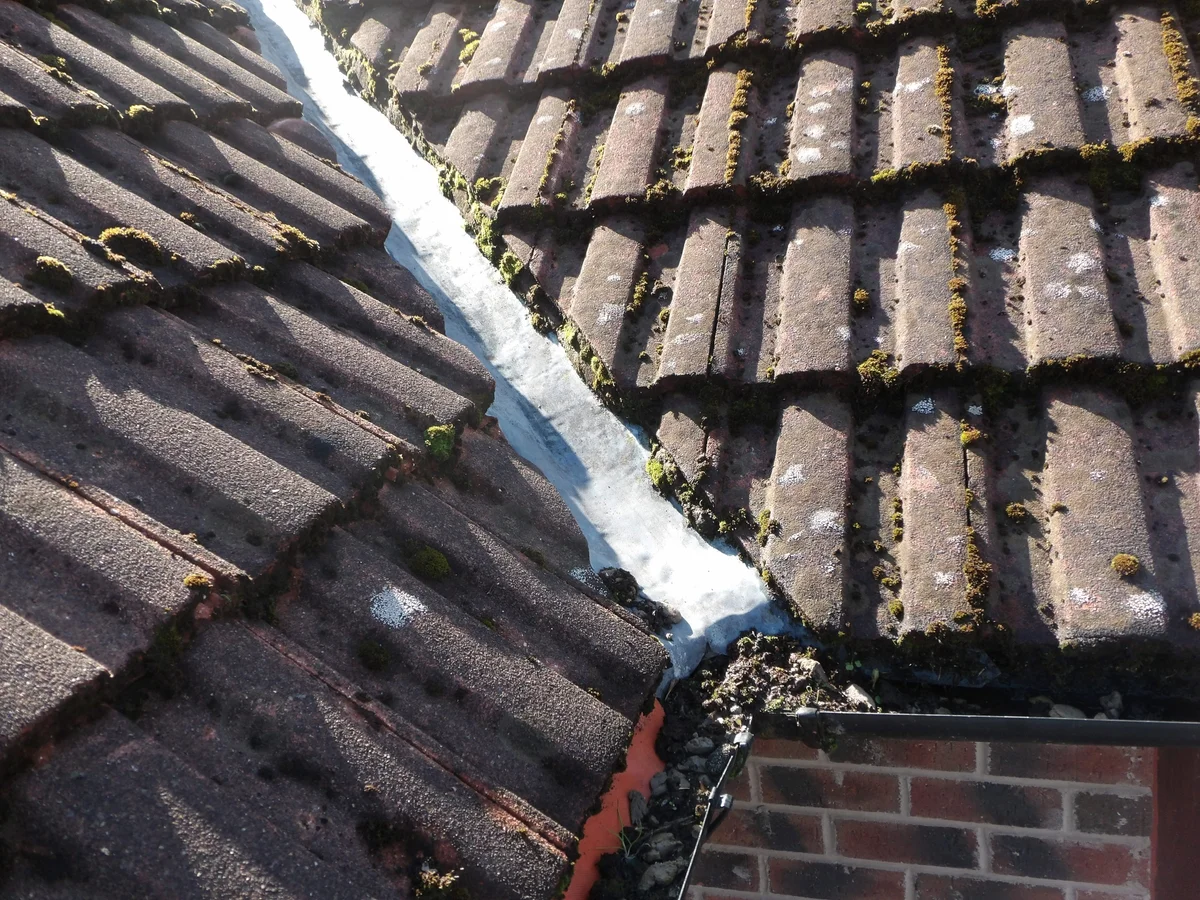
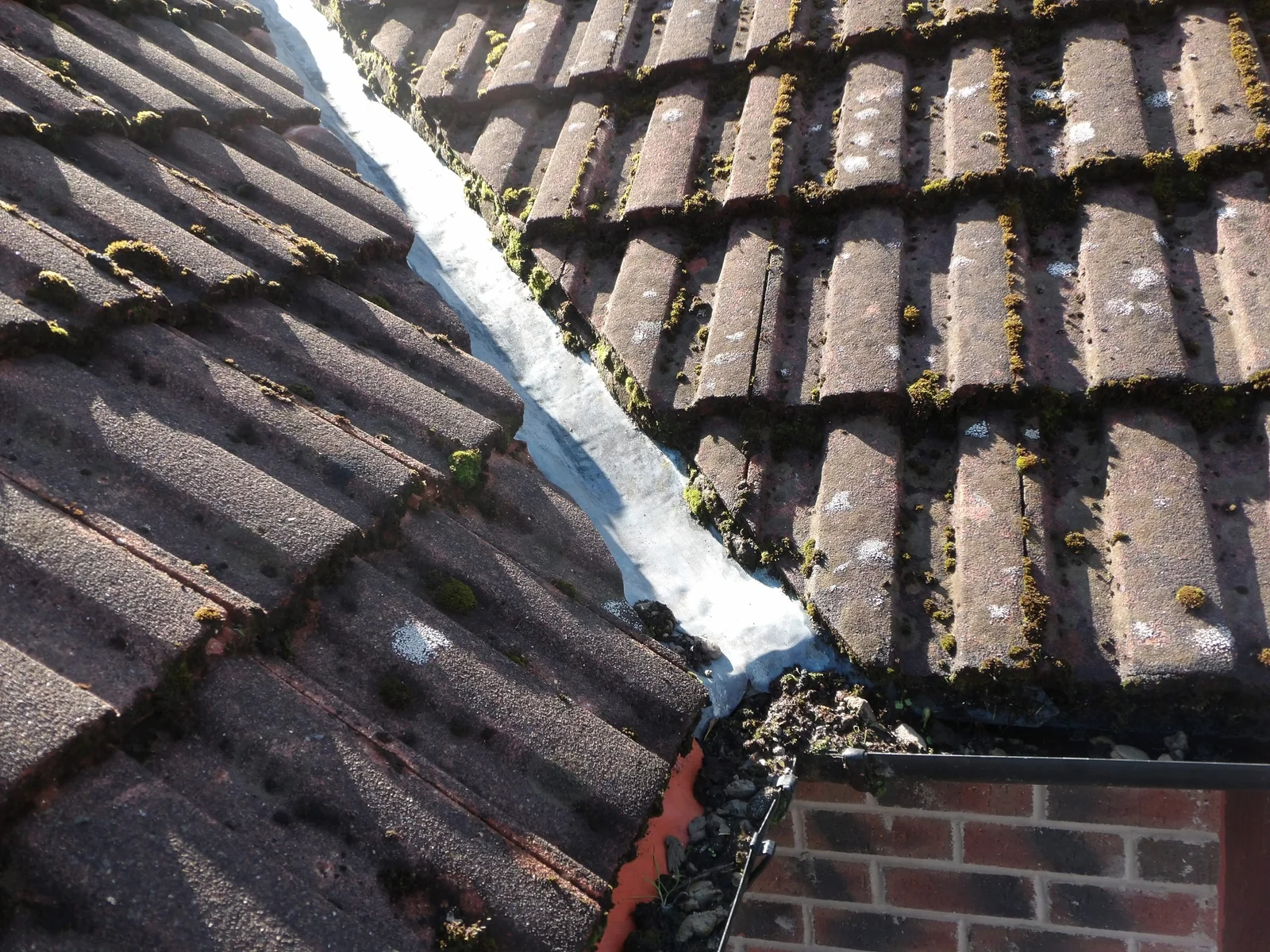
The open valley channel can be followed to the gutter junction. Moss and debris collect around its lower end and adjoining coverings. That visible accumulation is a finding; leakage, overflow and the concealed lining condition need separate evidence.
Survey archive photograph · View larger image
A soaker and a cover flashing do different jobs
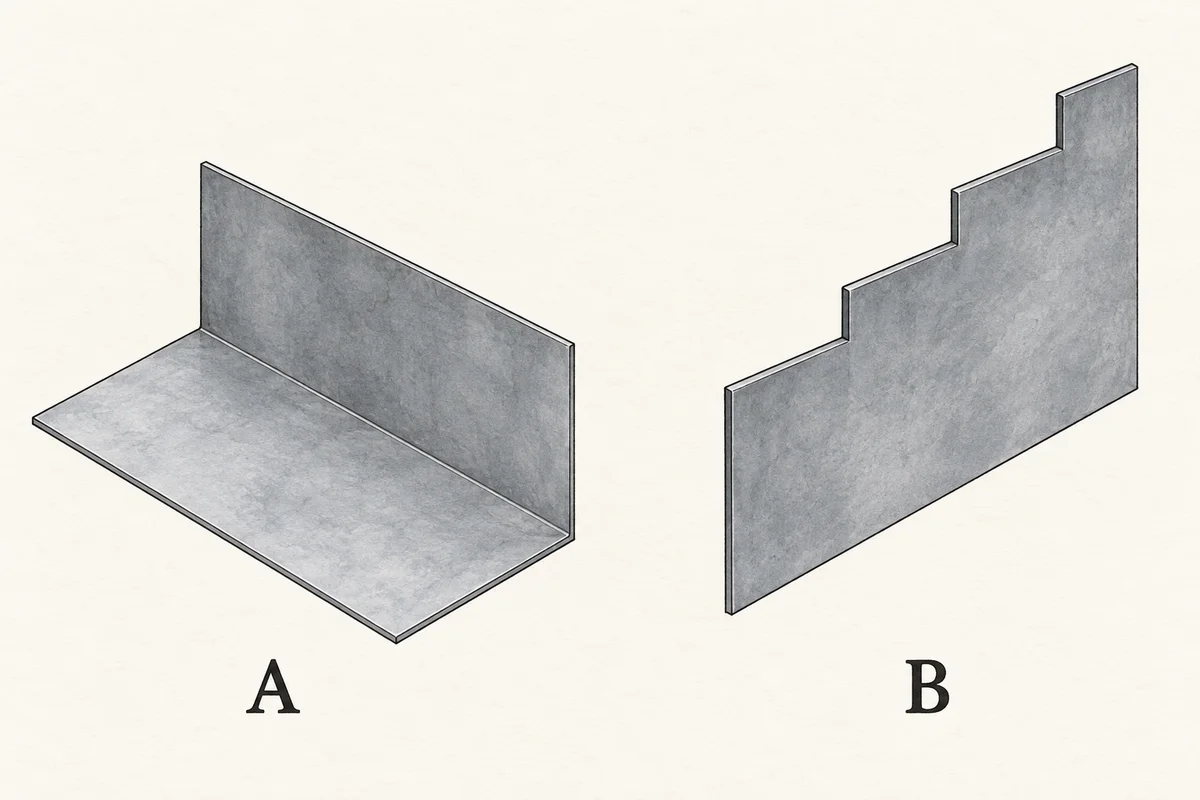
Illustration notes
AI-generated illustration. View larger image.
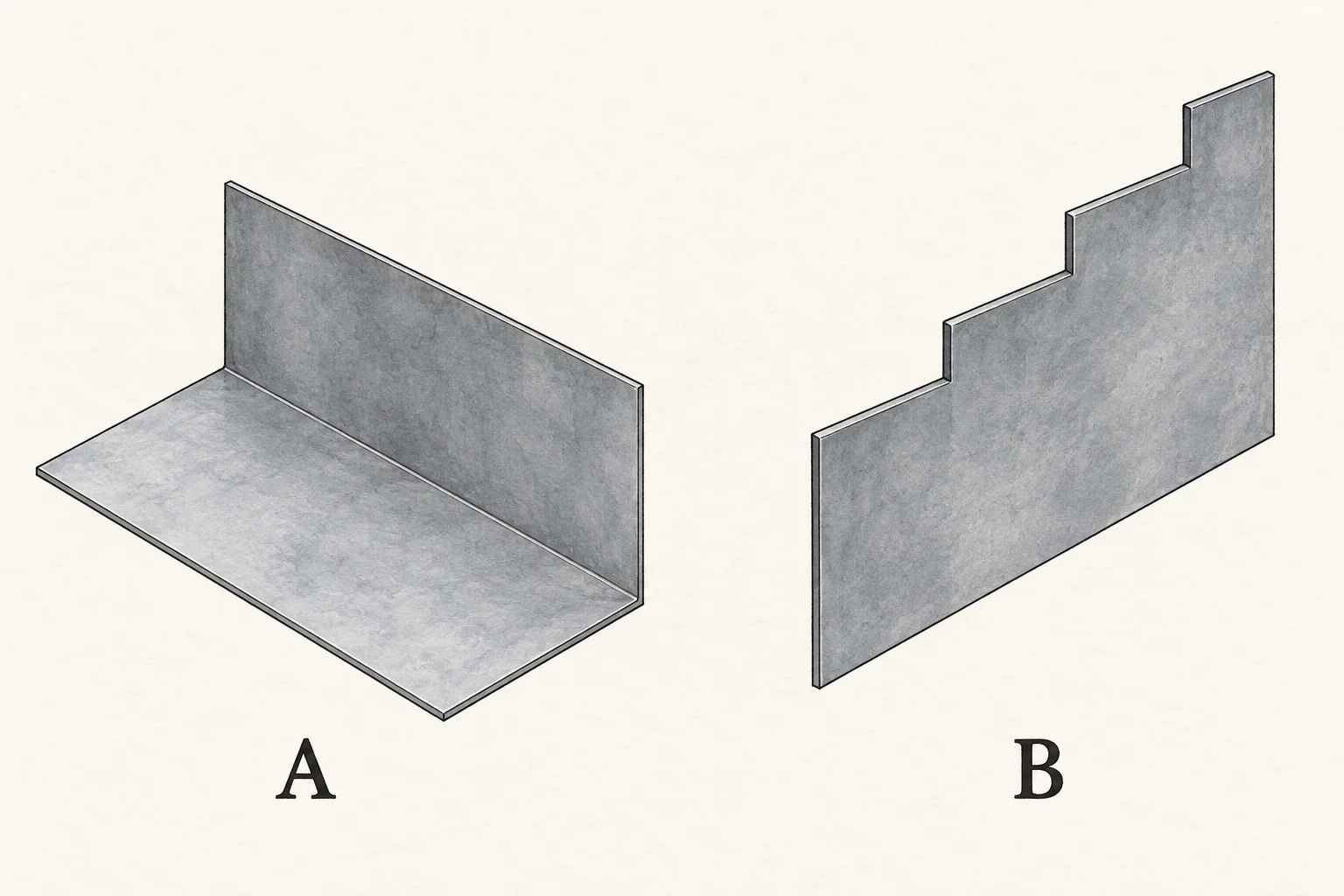
A
Soaker profile
The simplified L shape makes a roof leg and a wall upstand visible. The installed component belongs to a particular covering detail.
B
Stepped cover flashing
The stepped wall piece is a separate component. This isolated outline does not show its installation or an underlying soaker.
In Marley's double-lap plain-tile side-abutment detail, individual soakers sit between successive courses and turn up the wall. Stepped cover flashing protects their upstands. At a top abutment, an apron extends onto the upper tile courses. These are different relationships, even where exposed metal looks similar. Marley, printed pp. 25–27.
Not every soaker is lead or interchangeable. Marley's separate dry-soaker leaflet describes polypropylene components for named tile ranges, including product-specific forms and handed variants. Its December 2018 leaflet illustrates why the precise covering and accessory must be identified; obtain current compatibility information before selection. Marley, Individual Dry Soakers, pp. 1–2.
Read a real British junction
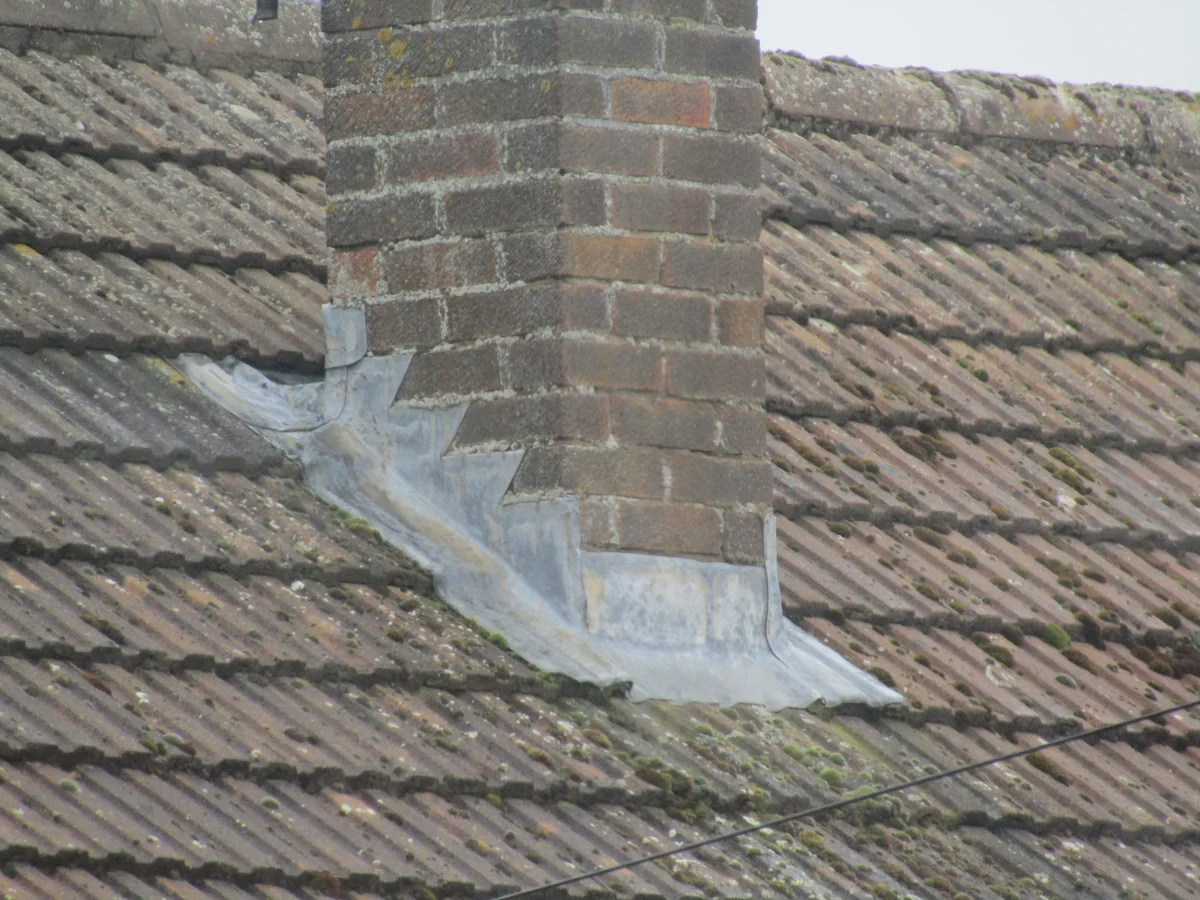
Photo credit and source
Lead flashing around a chimney stack, Trimingham, photographed 28 February 2020 by Kolforn (Wikimedia). CC BY-SA 4.0. Resized and converted to WebP; same licence. View larger image. No endorsement implied.

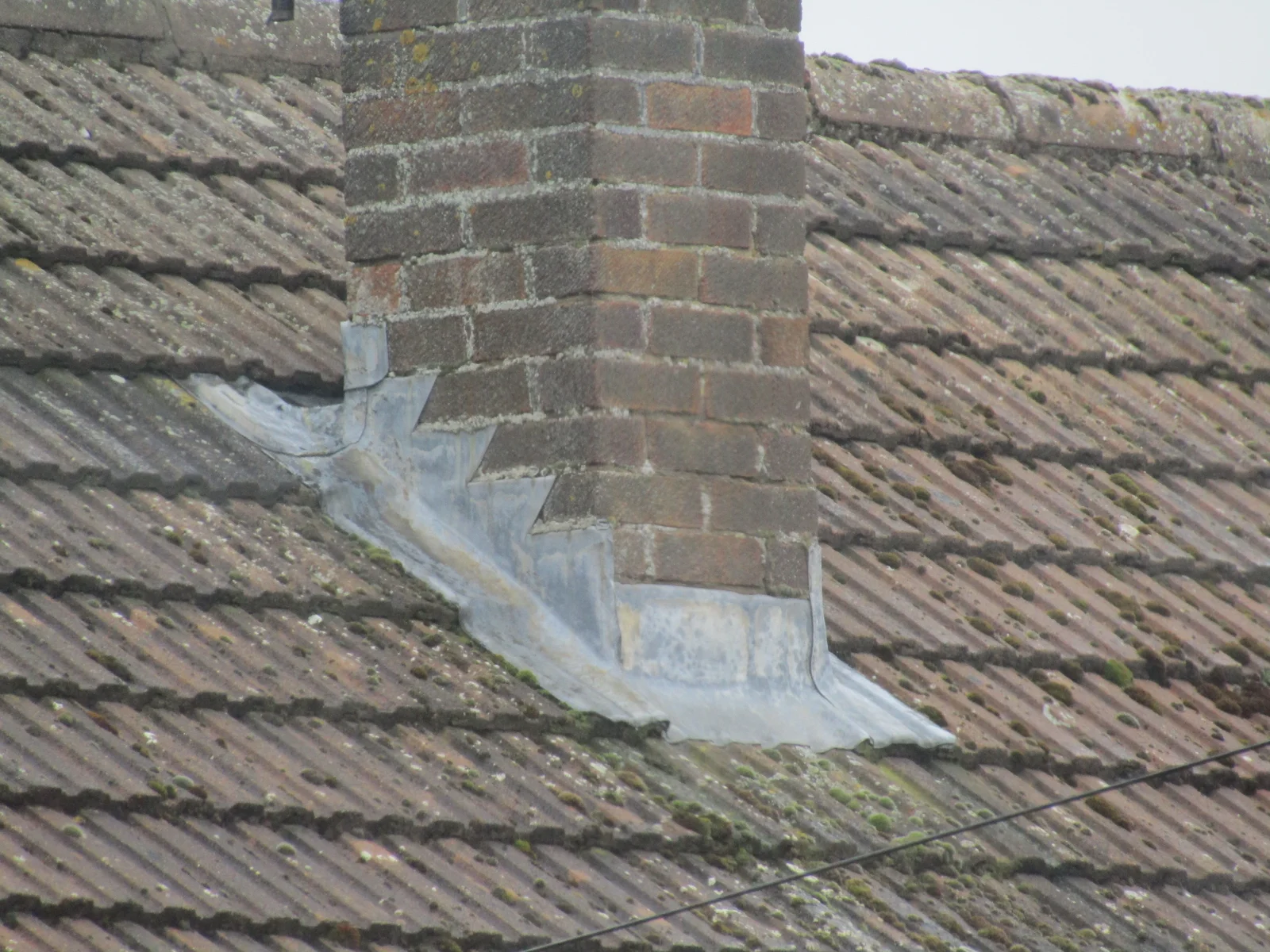
At Trimingham, the photograph shows stepped metal weathering along the visible sloping side of a brick chimney and an apron at its front. The source identifies the material as lead. Neither the photograph nor that description establishes concealed soakers, fixings, lap dimensions, chase depth or watertightness. Treat it as an observation example, not a model installation.
Try describing the two visible parts without adding a diagnosis. Then list the questions a closer investigation would need to answer. The companion roof-junction inspection guide develops that exercise.
Describe the finding before selecting its explanation
Lead can accommodate complex junctions, but a visible defect still needs a cause-based assessment. Historic Environment Scotland describes wind damage, restraint of thermal movement and corrosion as distinct leadwork problems. It also identifies damage from slipped slates and deterioration of supporting timber. Similar-looking disturbance can therefore require different investigations. This is Scottish traditional-building guidance, not a universal replacement rule. HES, INFORM: Roofing Leadwork, “Defects and repairs”, PDF pp. 3–5.
In the record, locate a tear, lifted edge, deformation, deposit or apparent opening as precisely as the view permits. State whether the observation comes from a distant photograph, accessible close view or reported history. Separate that finding from a suggested mechanism. A repair enquiry should seek evidence of the cause and the extent affected, rather than presume that adding sealant or replacing an exposed strip resolves the junction.
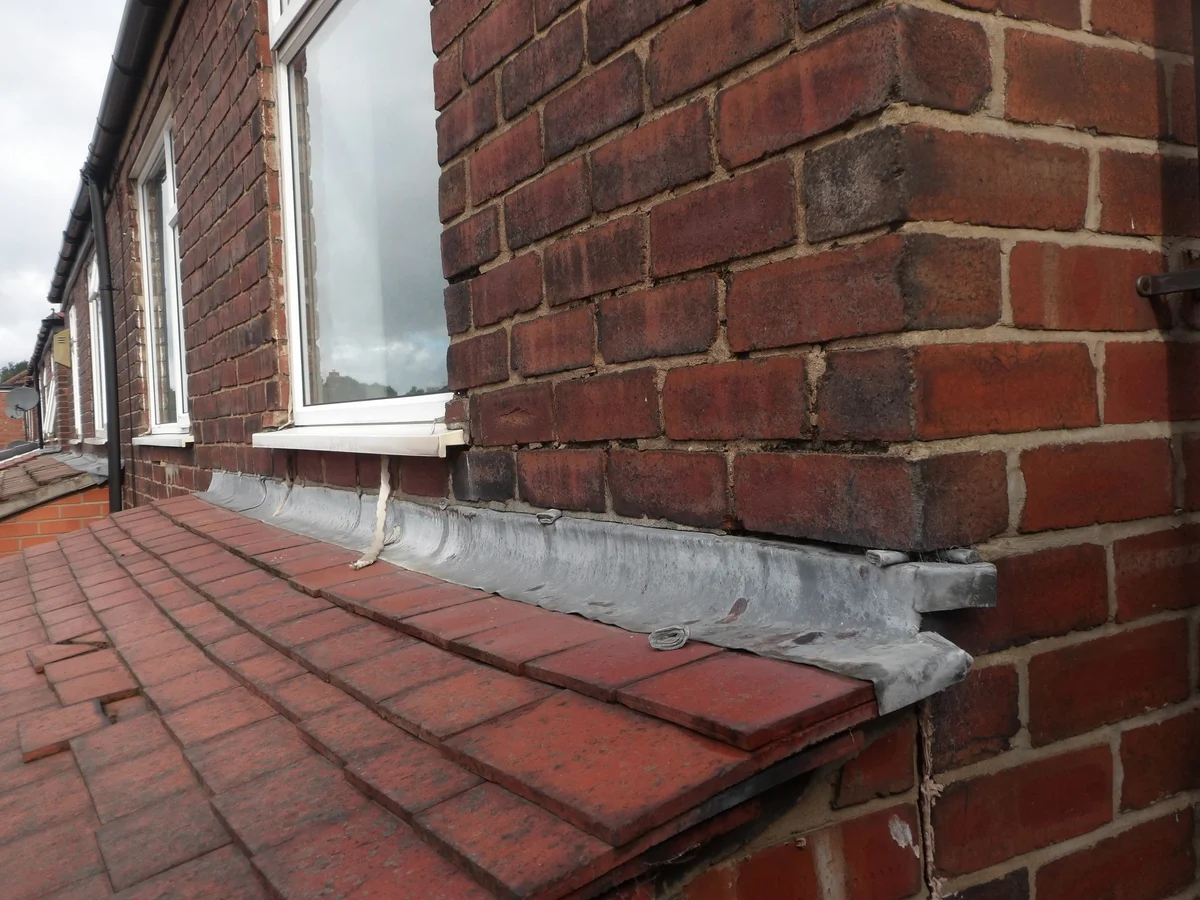
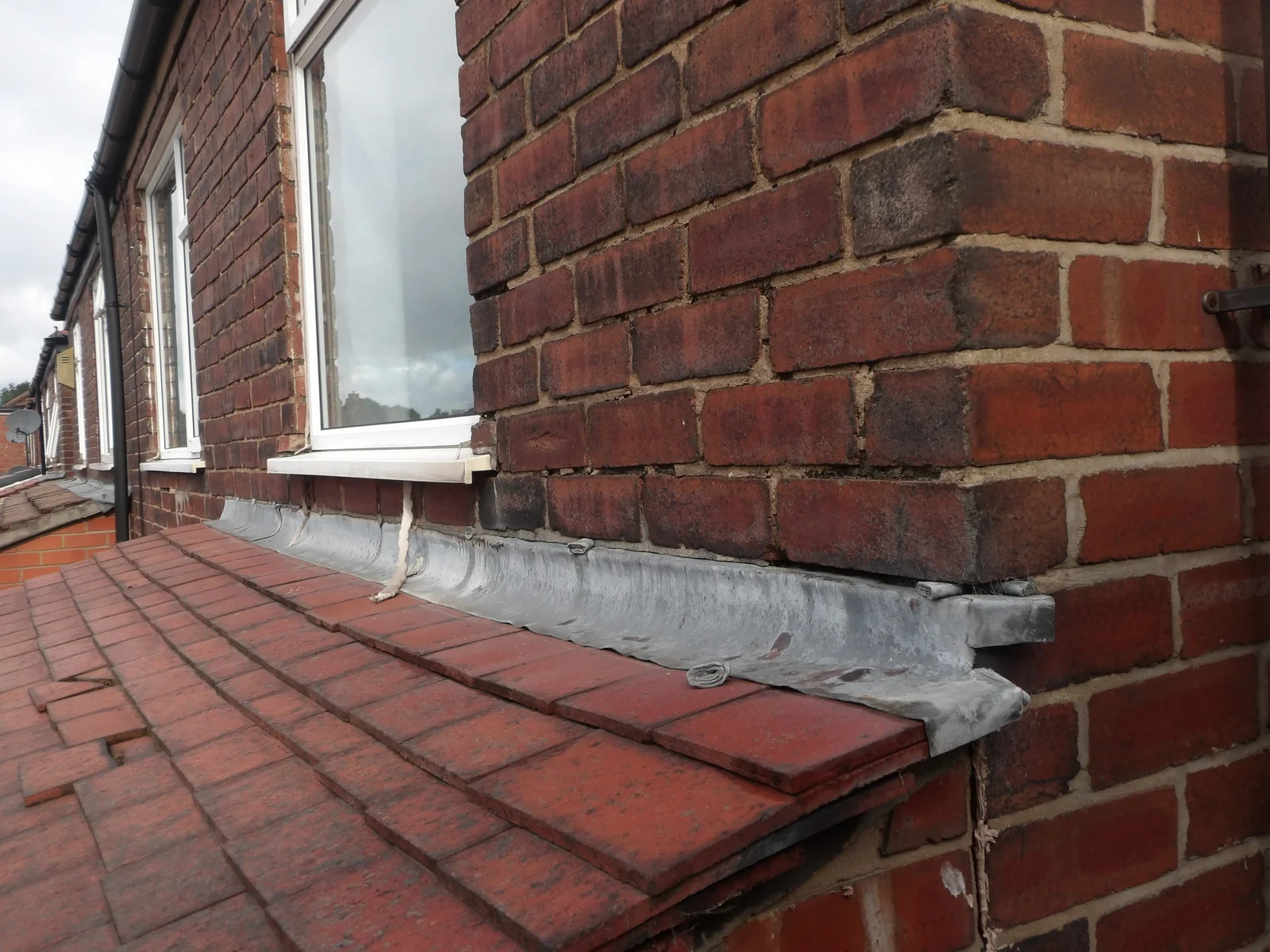
An open joint is visible beside the flashing at this roof abutment. Locate the exposed edge and connection; the photograph does not show the concealed laps or establish leakage.
Survey archive photograph · View larger image
Historic details need their own context
Traditional mortar fillets deserve an informed assessment. SPAB advises retaining appropriate historic details rather than automatically replacing them with lead. The presence of mortar alone does not establish a defect, nor does tradition establish that a particular junction is sound. SPAB, roof maintenance.
Record the building's construction, existing detail and known alterations before proposing a different system. Conservation requirements and the relevant national rules must be checked for an actual project; this article makes no consent determination.
Continue with inspect roof junctions to build a useful evidence record. Link the valley outlet to the rainwater route, and identify its covering through British roof coverings. Continue around the roof with ridges, hips and verges and eaves and roof spaces. Detailed lead sizing and system-specific repair specifications remain outside this introductory coverage.