A finished wall is a set of layers: background, plaster and decoration. Paint can separate while plaster remains sound; a damaged background raises a different repair question. Finding the affected layer is the first step towards a compatible repair.
Compare lime and gypsum plaster, paint and paper finishes found in British interiors. The wall and ceiling guide explains the construction supporting them.
Start with the background, plaster and decoration
The background, also called the substrate, is the surface receiving the next layer. Brickwork can be the background to plaster; plaster can be the background to paint. Always say which interface you mean.
An undercoat builds up the plaster and helps establish the surface plane. The finish coat provides the finer face. A skim is a thin finishing application; it does not establish the condition of everything beneath it. Key means a physical texture or arrangement helping a coat grip. Suction describes a background's tendency to draw water from the wet material applied to it.
Use this sequence when reading an exposed edge: supporting construction → background preparation → plaster layers → decoration. A patch may replace only one layer. Record what is visible and leave concealed layers unresolved.
Two ways a finished face is built
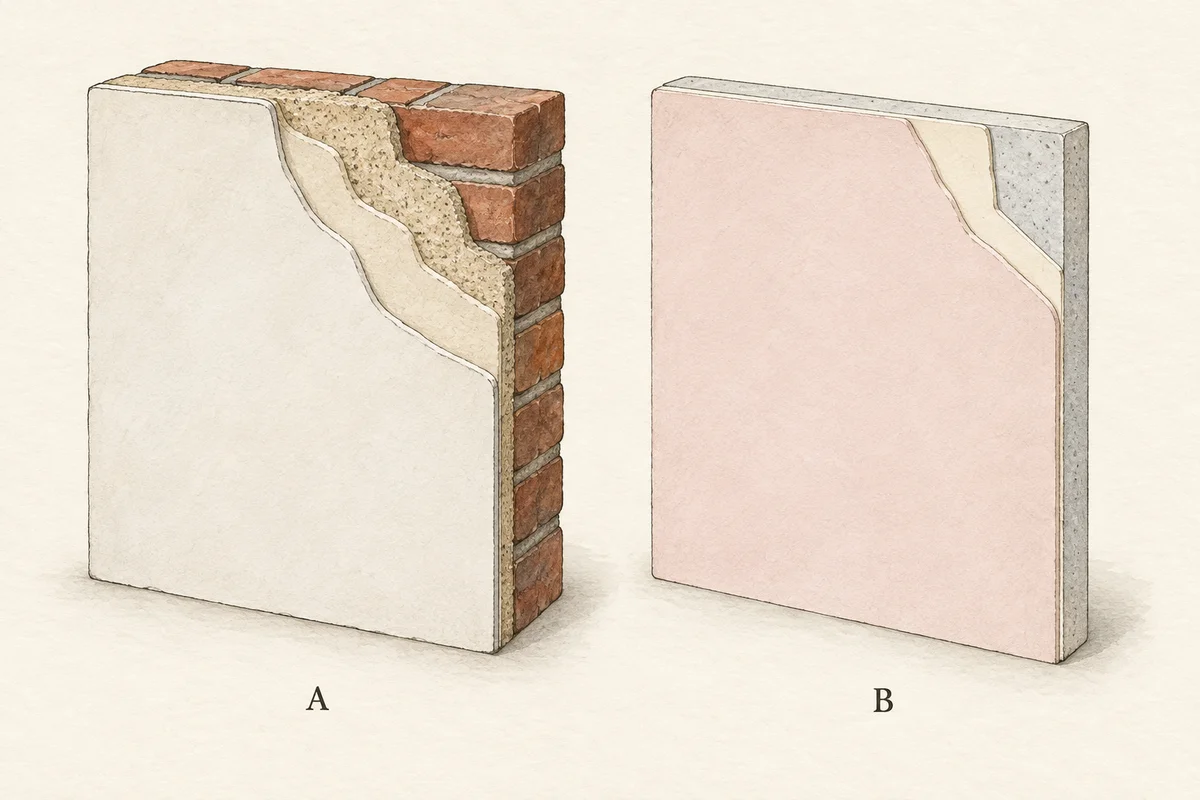
Illustration notes
AI-generated illustration. View larger image.
A: several coats can serve different purposes. The coarse layer and finer face need not have the same composition. Historic plaster may include fibres in underlying coats. Local traditions, later repairs and mixtures matter: the Northern Ireland historic-finishes note includes gypsum use in the eighteenth century, so “old equals lime” is an unreliable rule. That regional history is not a dating test for every British house. [PF02]
B: the board and the skim remain separate products. Thistle MultiFinish is one gypsum finishing plaster suitable for specified backgrounds, including plasterboard. It does not identify the illustrated board. [PF03]
Lime and gypsum: ask a more precise question
Lime is a binder family. Historic Environment Scotland distinguishes air lime, which hardens through reaction with carbon dioxide, from natural hydraulic lime, which also hardens through reaction with water. Lime putty is one form used for internal plasterwork. “Lime plaster” alone therefore leaves important questions about binder, aggregate, coats and intended use unanswered. [PF01]
Gypsum products serve different jobs. MultiFinish's instructions vary with background. Repeated or prolonged moisture can affect its strength and adhesion. Do not transfer that product's preparation to every plaster. [PF03]
Setting and drying are different. MultiFinish requires dryness before decoration. A firm surface does not prove readiness for the proposed coating: obtain the exact system's requirements rather than accept a fixed “next day” promise. [PF03]
Do not identify a binder from pink, cream or white colour alone. Record a tentative description, then seek product records, an appropriate specialist assessment or analysis where the decision warrants it. A small exposed patch also cannot prove that the entire room has the same plaster.
The binder and the coat's job are separate choices
Calling a material ‘gypsum plaster’ leaves its function unresolved. British Gypsum describes BondingCoat as a backing plaster for smooth or low-suction backgrounds, and HardWall for medium- to high-suction backgrounds such as suitable masonry. MultiFinish provides a finishing coat on its specified backgrounds. These product examples explain why a backing coat and a thin finish cannot simply be exchanged because both are gypsum. [PF03, PF14]
Likewise, a lime plaster specification needs more than ‘use lime’: binder type, aggregate, coat build-up and the existing background all matter. A coarse underlying coat and a fine finishing coat serve different purposes. In historic work, the composition and condition of retained material help inform the repair, along with its significance. [PF01–PF02]
The practical question is: what does this coat have to bond to, and what will it carry? A sound plaster can still be unsuitable as an unprepared background for a particular covering. A proposed new skim also cannot stabilise loose layers beneath it.
Read the surface finish
For the differences between matt, eggshell and gloss, primer and undercoat, wallpaper constructions and pattern matches, continue to paint and wallcoverings. This section locates those finishes within the plaster build-up.
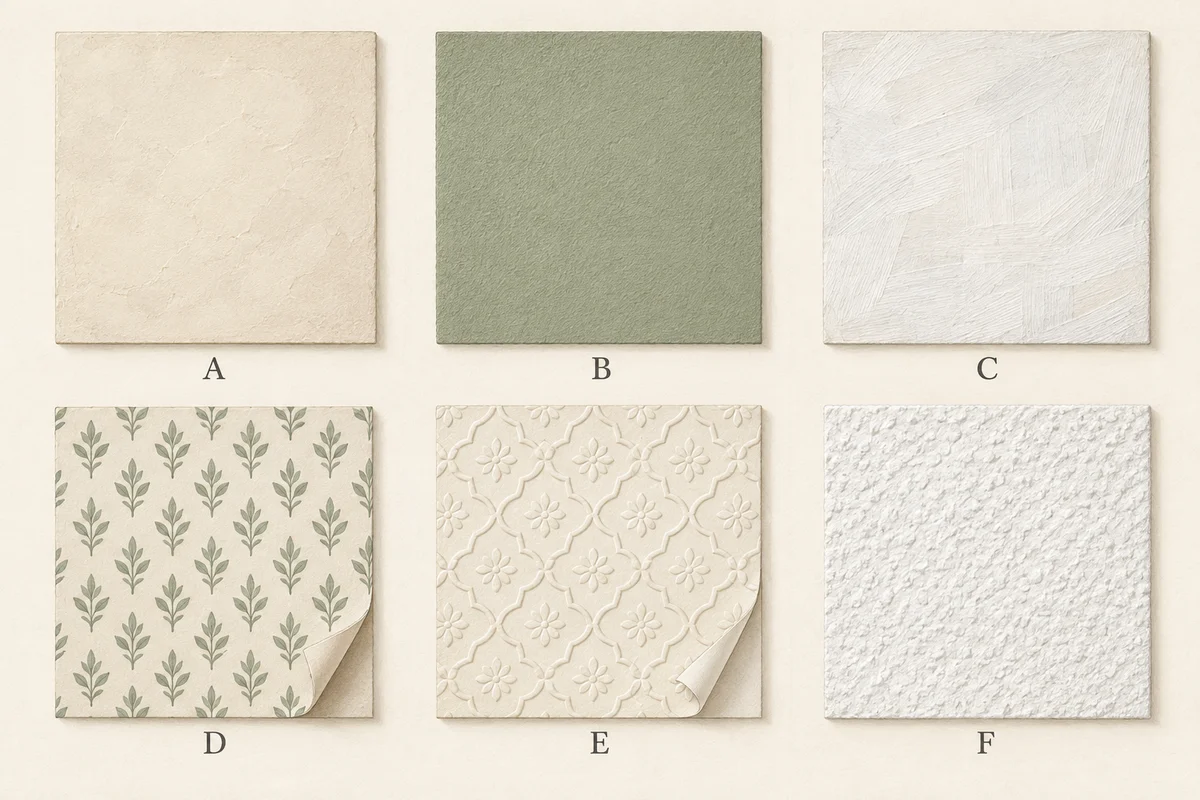
Illustration notes
AI-generated illustration. View larger image.
| Finish family | What to understand | What to establish for a repair |
|---|---|---|
| Exposed or decorated plaster | Plaster is the underlying finish layer, even where paint gives it its visible colour. | Which layer is lost or damaged; what remains sound; the background and proposed finish. |
| Modern paint systems | Sheen, colour and trade labels do not specify the entire coating system. | Product, primer, existing coats, suitable substrates, cleaning demands and drying requirements. |
| Limewash | A lime-and-water coating, sometimes modified. SPAB notes that suitability changes with the substrate; it is not automatically suited to plasterboard or an emulsion-painted face. [PF07] | Existing coatings, the actual formulation and its stated background requirements. |
| Soft distemper | A traditional matt coating using whiting and a water-bound glue size. It differs from oil-bound “washable” distemper and has limited resistance to wiping and damp conditions. [PF06] | Which type survives and whether retaining or renewing it suits the room and conservation requirements. |
| Flat and embossed papers | Pattern and relief are separate characteristics. Paint can obscure an embossed surface. | Sheet type, seams, adhesion, layers beneath, significance and the extent required for a visual match. |
| Textured coatings | Pattern alone cannot settle composition. Some older decorative coatings contain asbestos. [PF09] | Appropriate asbestos information before work that could disturb the coating. |
Historic painted decoration may itself be valuable. SPAB recommends considering retention of sound old paint and conservation advice for significant schemes. An immaculate new finish is not the only measure of a good outcome. [PF05]
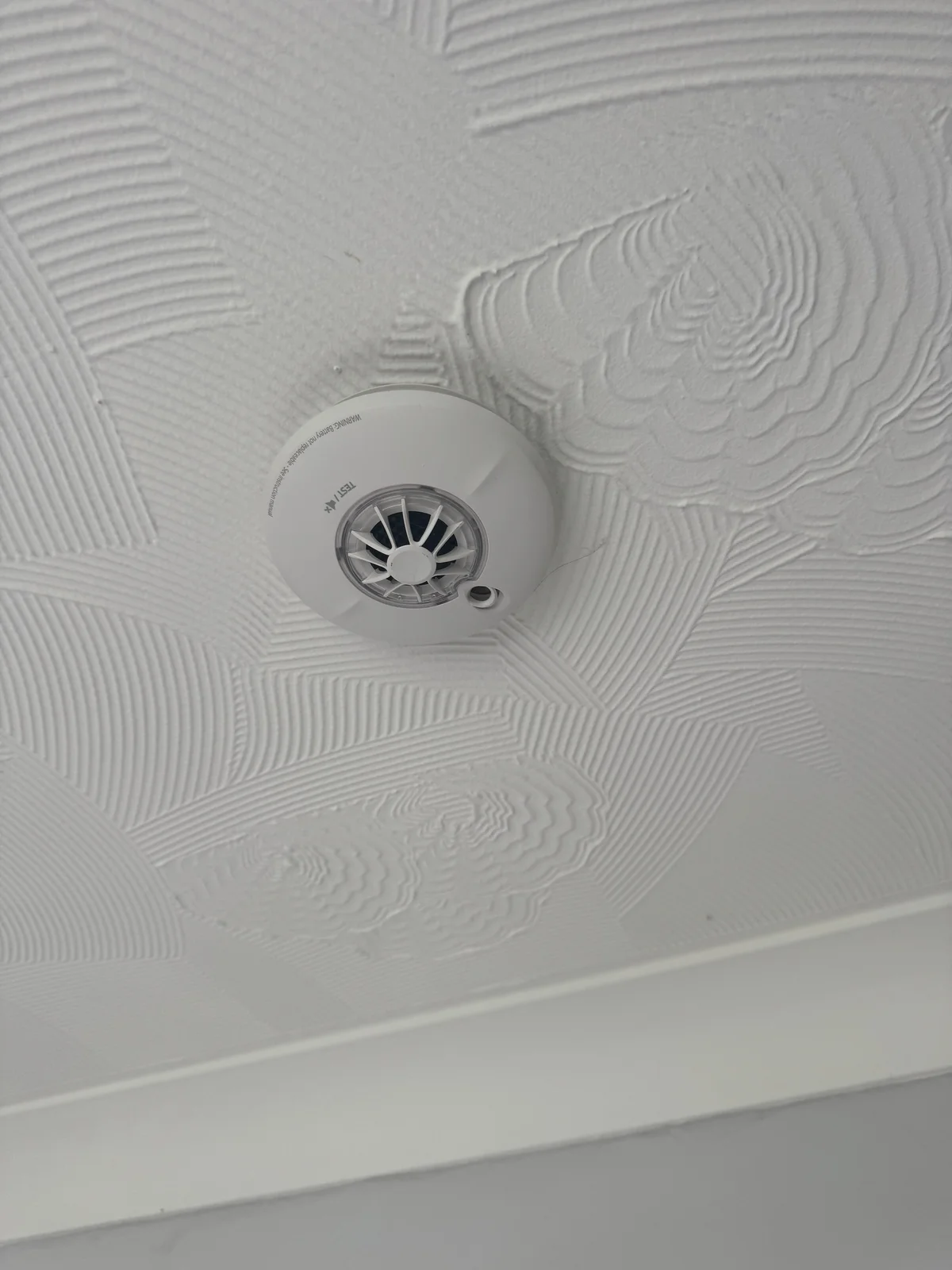
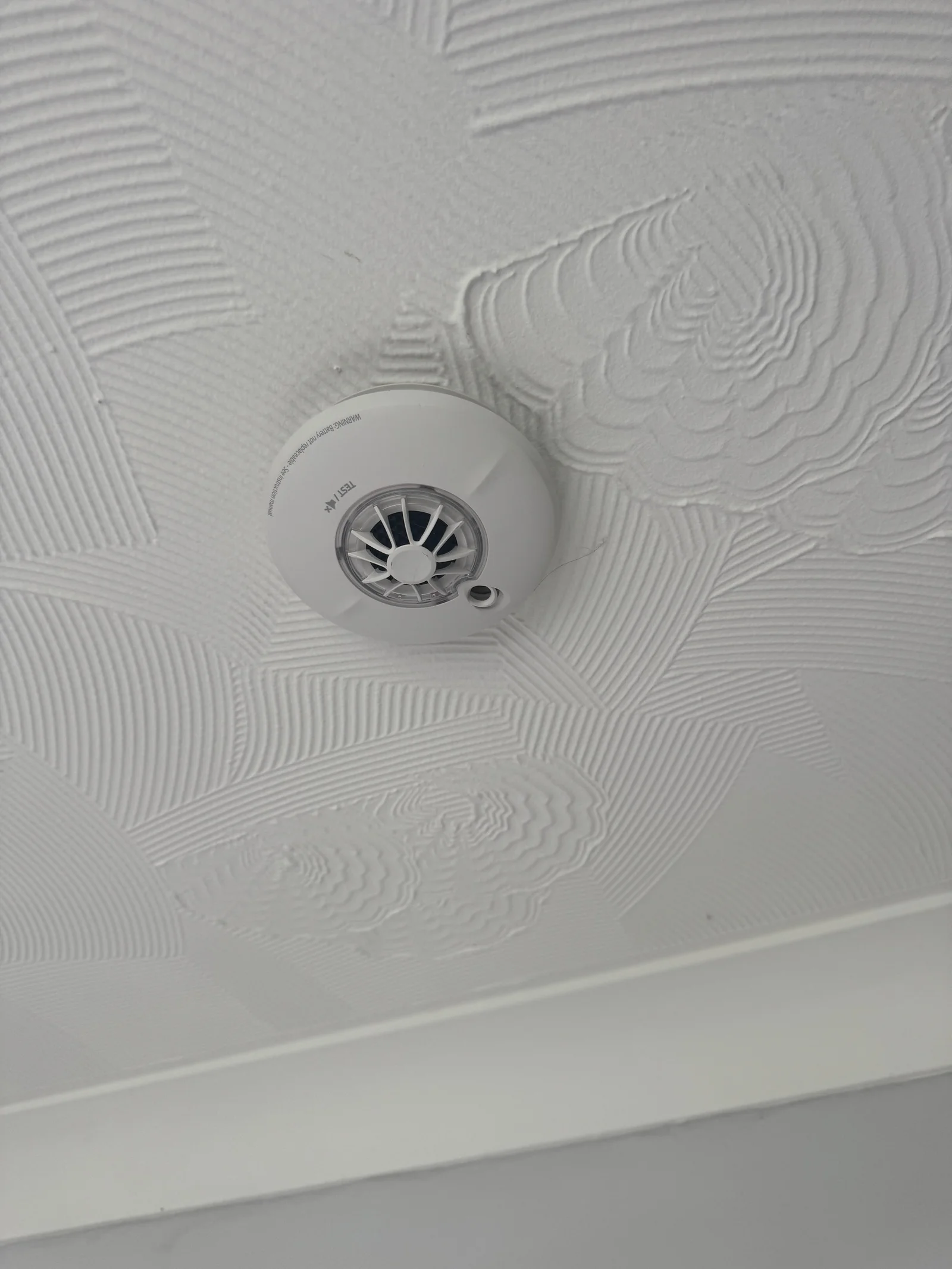
Combed and swirled texture is visible around the ceiling-mounted alarm. Describe that surface form without assigning a product, age or asbestos content from appearance.
Survey archive photograph · View larger image
Moisture and compatibility belong to the whole build-up
Historic England describes moisture movement through traditional construction in both liquid and vapour forms. Appropriate internal finishes can buffer humidity, but ventilation remains necessary. A “breathable” label is not a remedy for a leak or a complete account of a wall's moisture behaviour. [PF04]
For a repair enquiry, ask whether the proposed material suits the actual background, the adjoining plaster, the exposure and the decoration. Adding a vapour-permeable topcoat does not remove existing underlying coats. Equally, the presence of an old building does not justify diagnosing every local failure as “the wrong plaster”.
Trace any moisture evidence through the moisture investigation guide. Keep the observed stain, the reported leak repair and evidence of present drying separate.
Describe the change before naming its cause
| Observed finding | Useful distinction | Follow-up question |
|---|---|---|
| Thin paint film flakes away | Paint separation versus loss of the plaster beneath | At which interface is separation visible? What coating and preparation history can be established? |
| Granular material lies below a patch | Loose plaster versus paint or unrelated debris | Where did the material come from, and what condition is visible at that source? |
| A line follows the edge of an earlier patch | Local repair boundary versus a crack continuing through construction | Does it continue into adjacent finishes, openings or the reverse face? |
| Staining returns after decoration | A new coat has changed appearance, not established the moisture cause | What has changed over time, and how does it relate to water routes and room conditions? |
| Bulging, sagging or falling material | Potential instability rather than a purely cosmetic defect | What immediate access restriction and competent assessment are needed? |
These are investigation prompts, not one-sign diagnoses. Historic England's plaster extract describes several mechanisms behind loss of adhesion and cracking. It also discusses retaining stable historic material despite local detachment; that is not evidence that an unknown or visibly unstable ceiling is safe. [PF08]
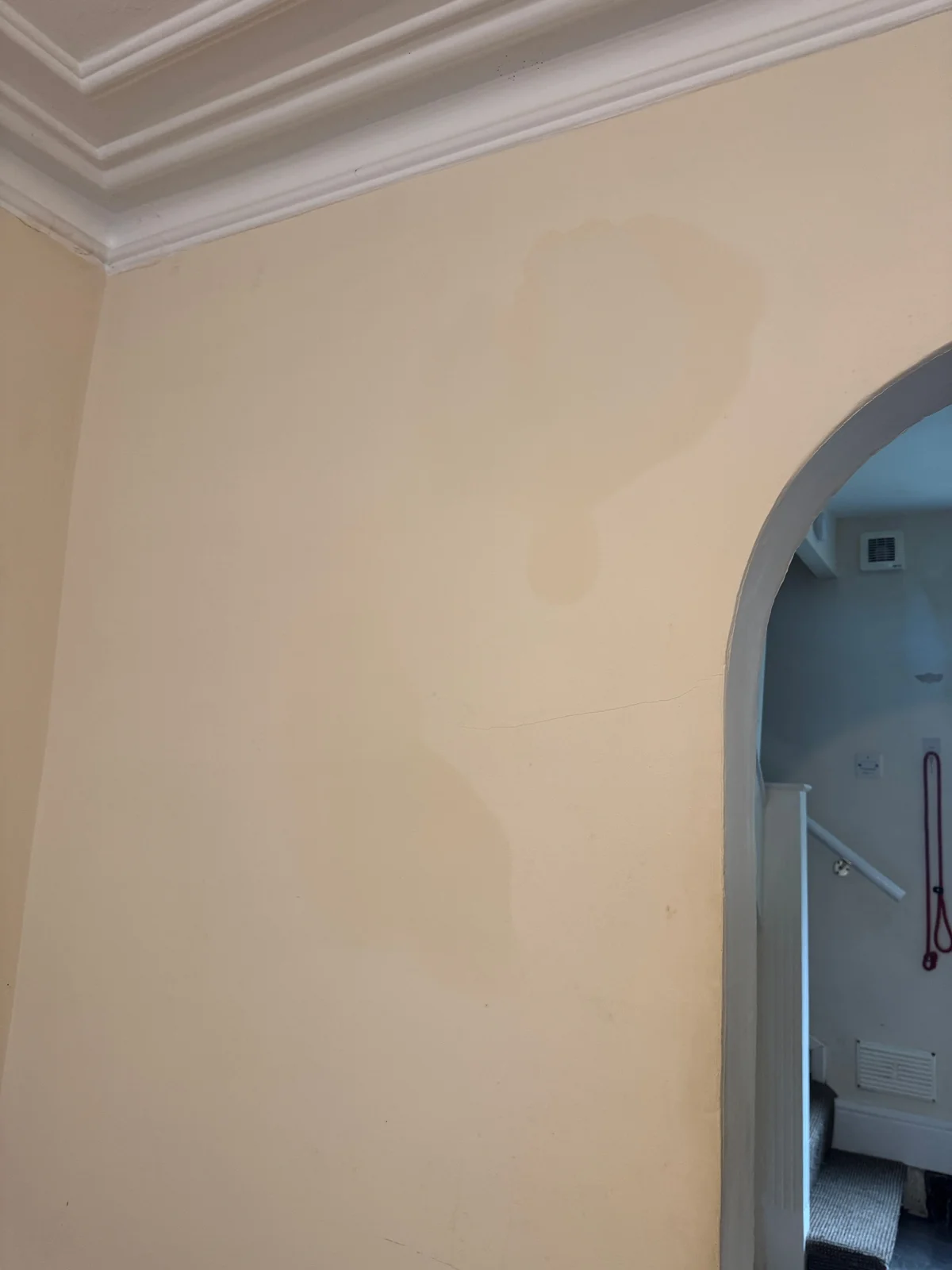
The cornice, arch edge and pale wall marks give fixed references for locating the visible crack and changes in decoration. Record those features separately: neither the marks nor the crack identify their cause, age or current activity.
Survey archive photograph · View larger image
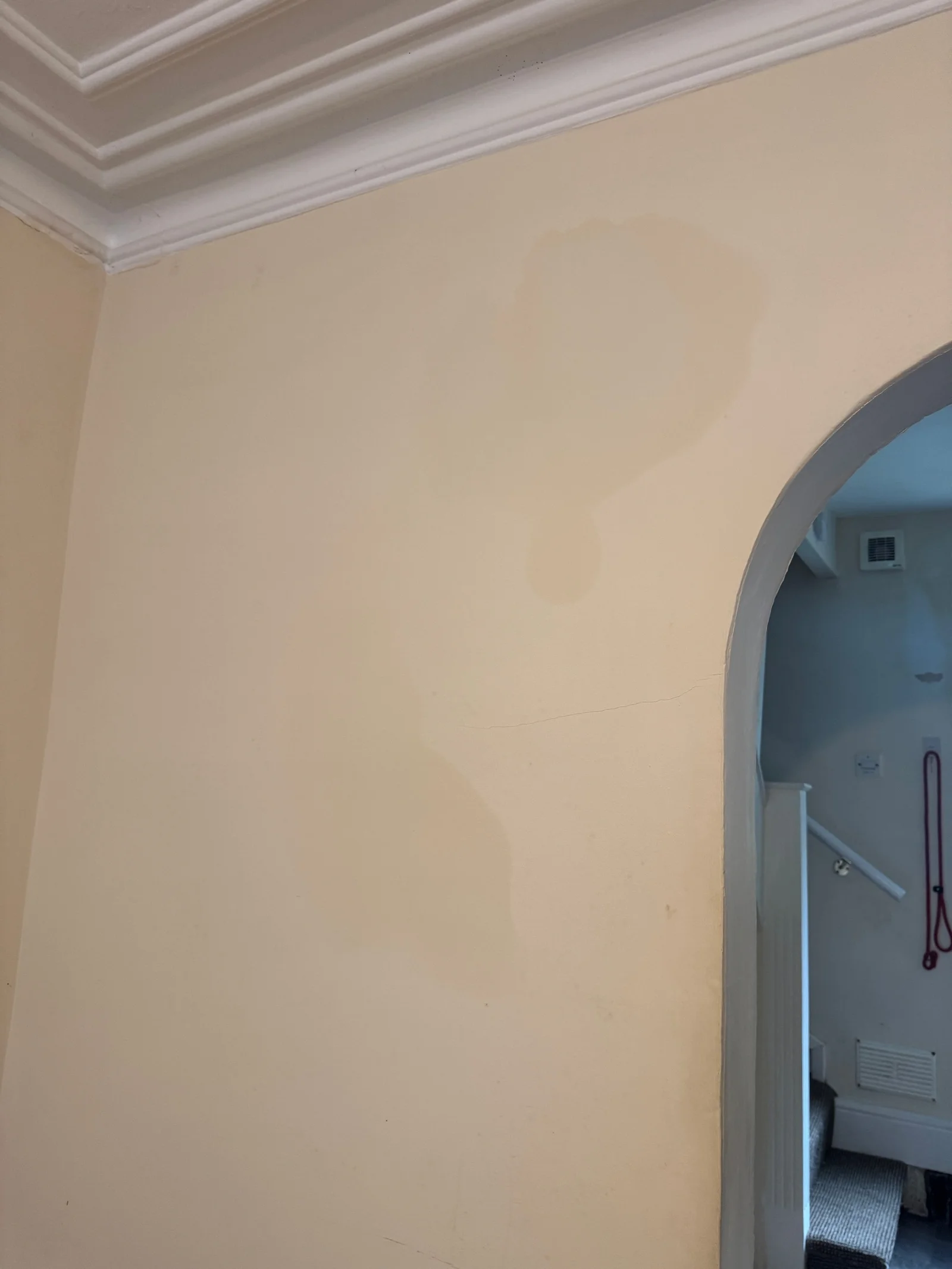
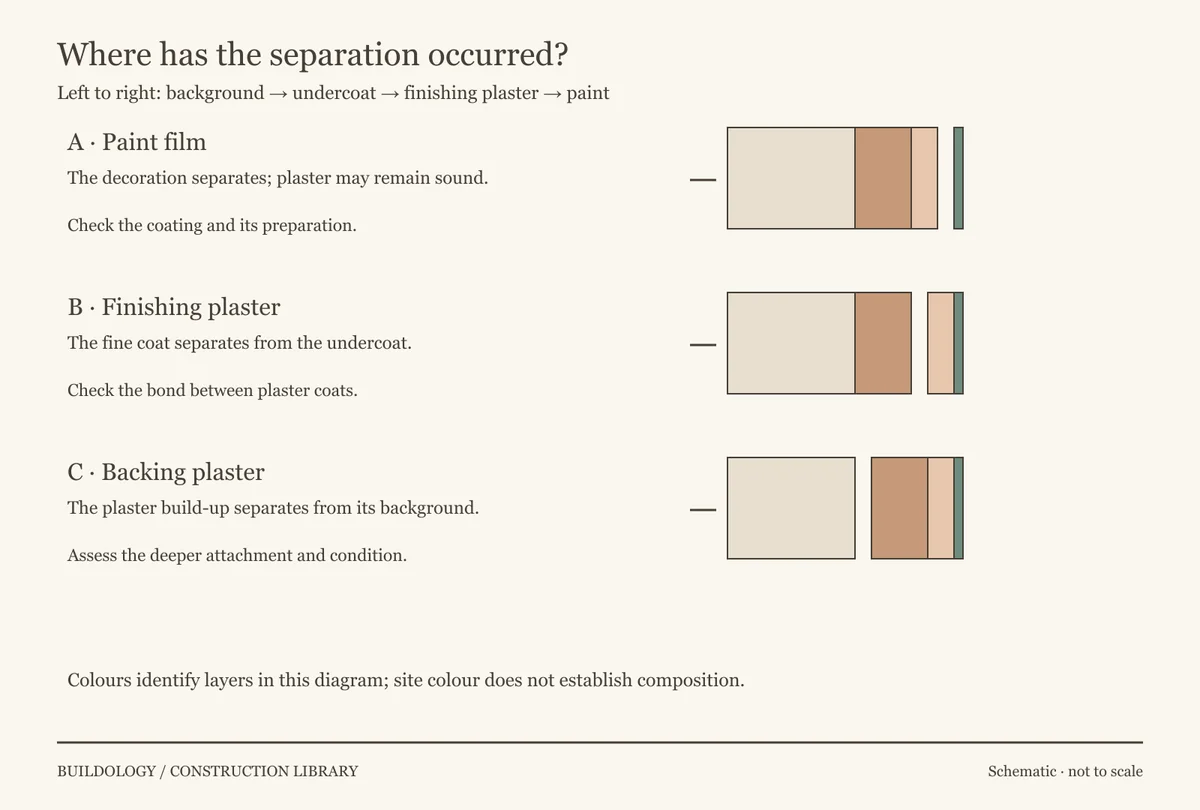
Illustration notes
Original explanatory diagram. View larger image.
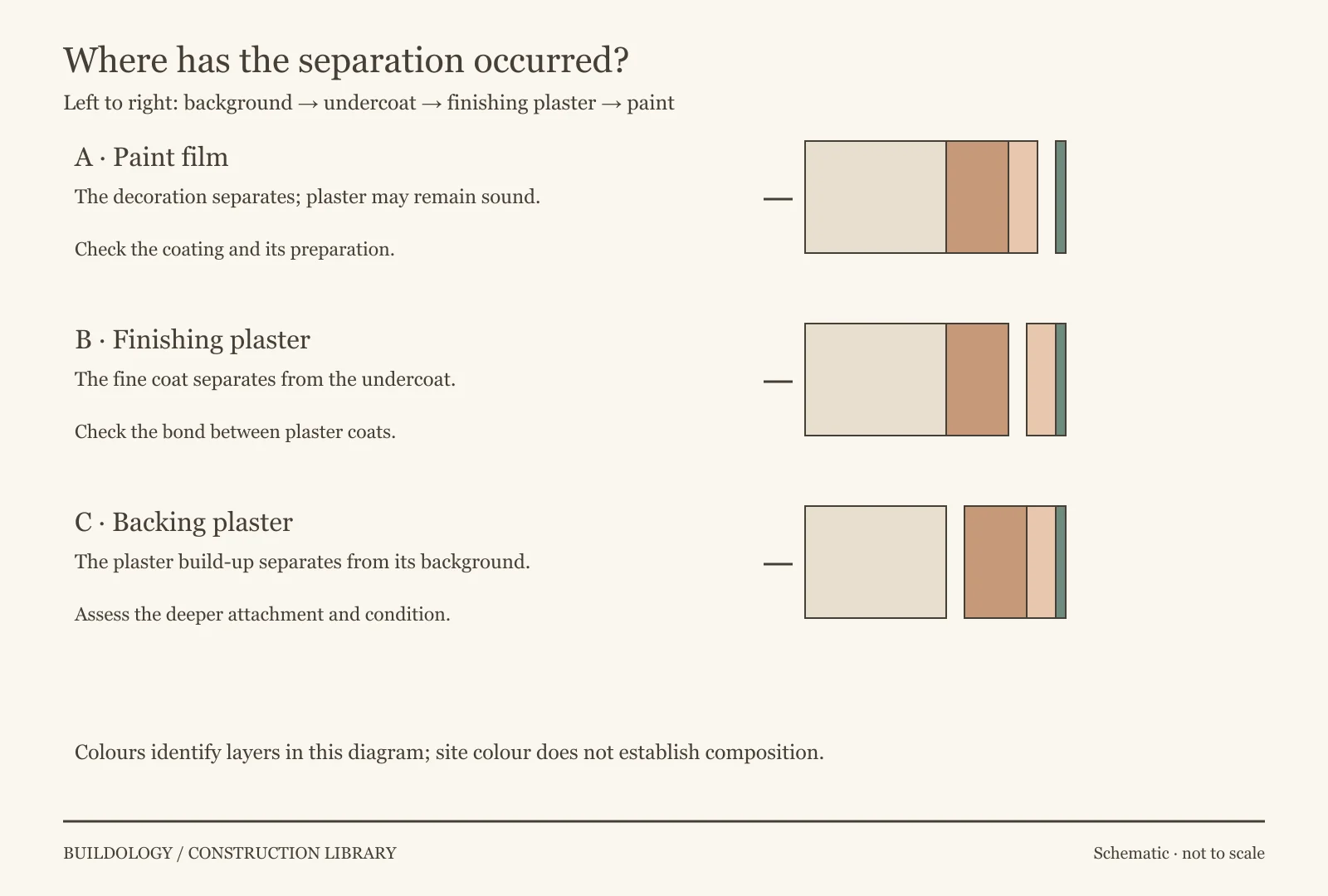
A coating problem concerns the decoration and its bond. A finish-coat problem reaches the finer plaster layer. A backing problem reaches the deeper attachment. Before selecting a primer, skim or full replacement, establish which of these is actually affected and whether there is continuing wetting, movement or instability. [PF03, PF05, PF08]
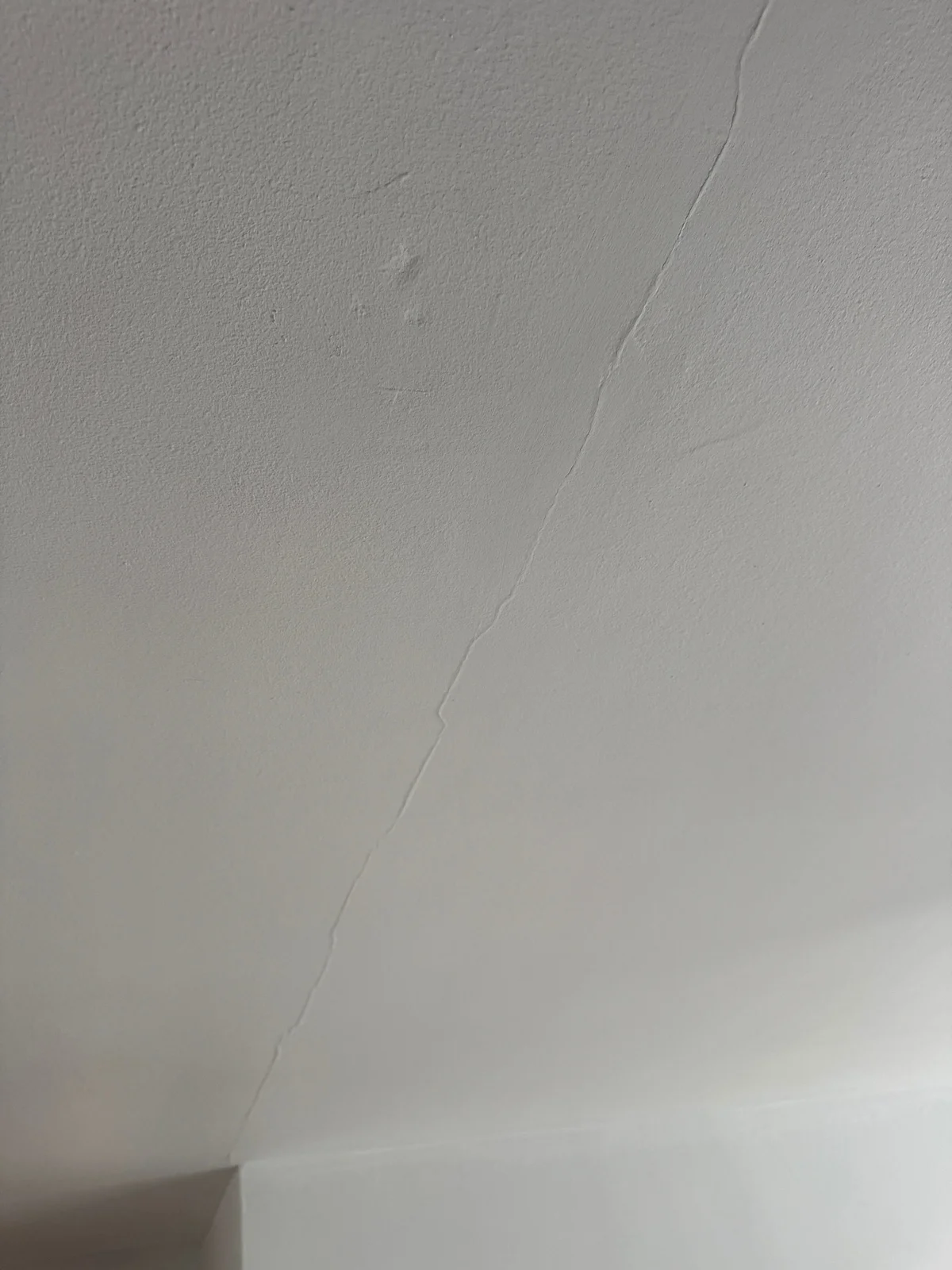
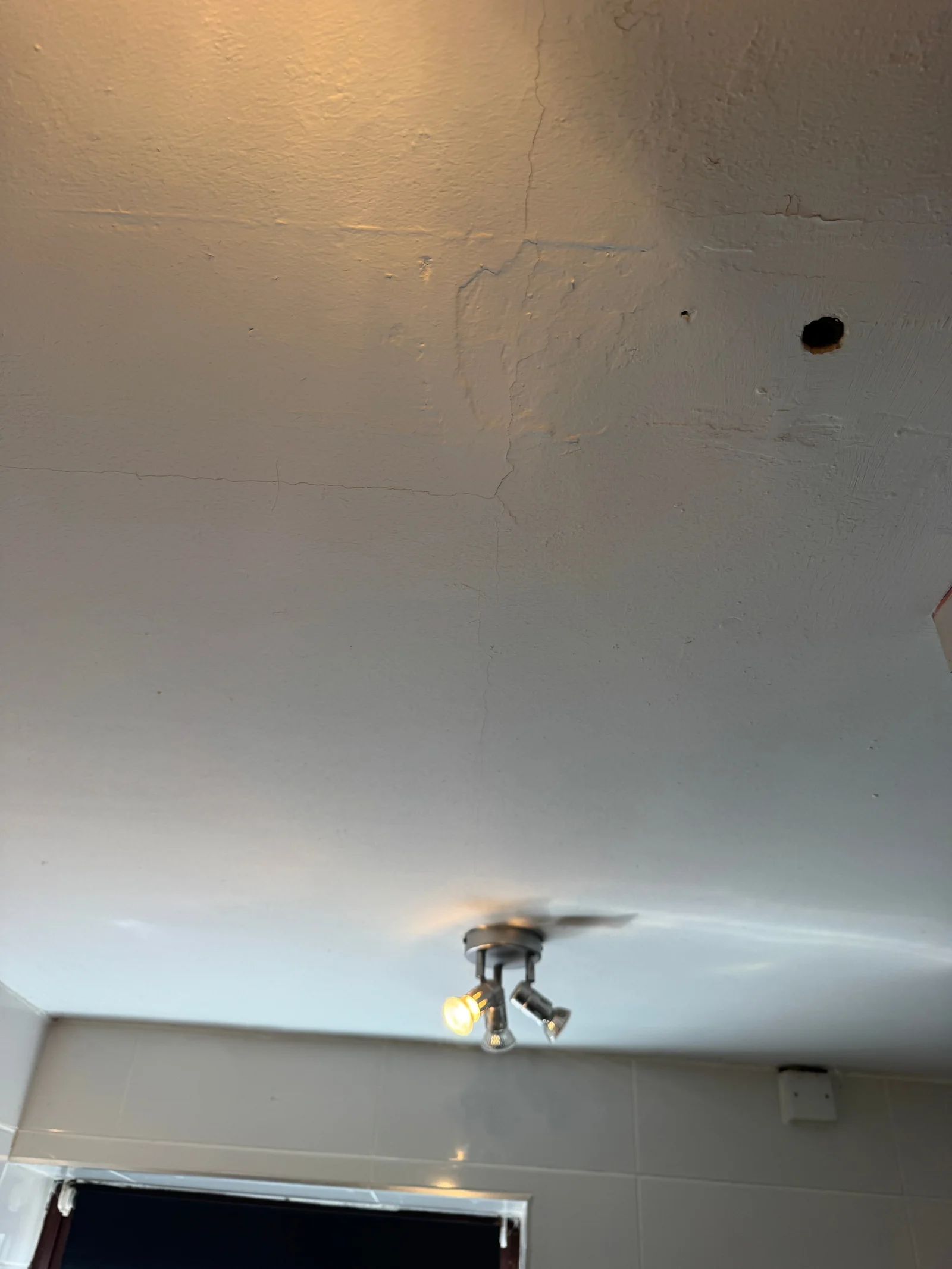
The crack follows a ceiling junction. Record the line and adjoining finishes; the photograph alone does not identify the concealed construction.
Survey archive photograph · View larger image
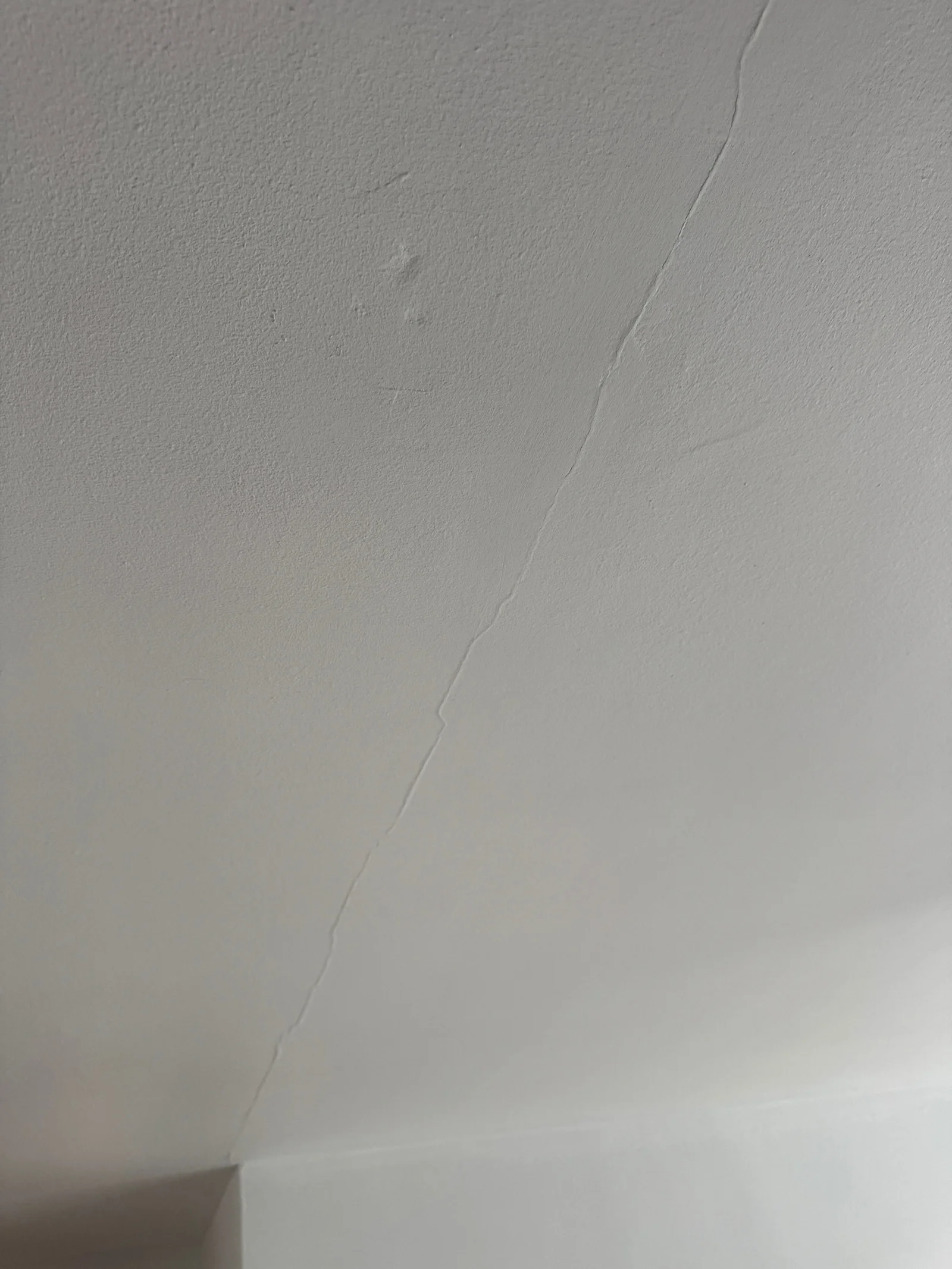
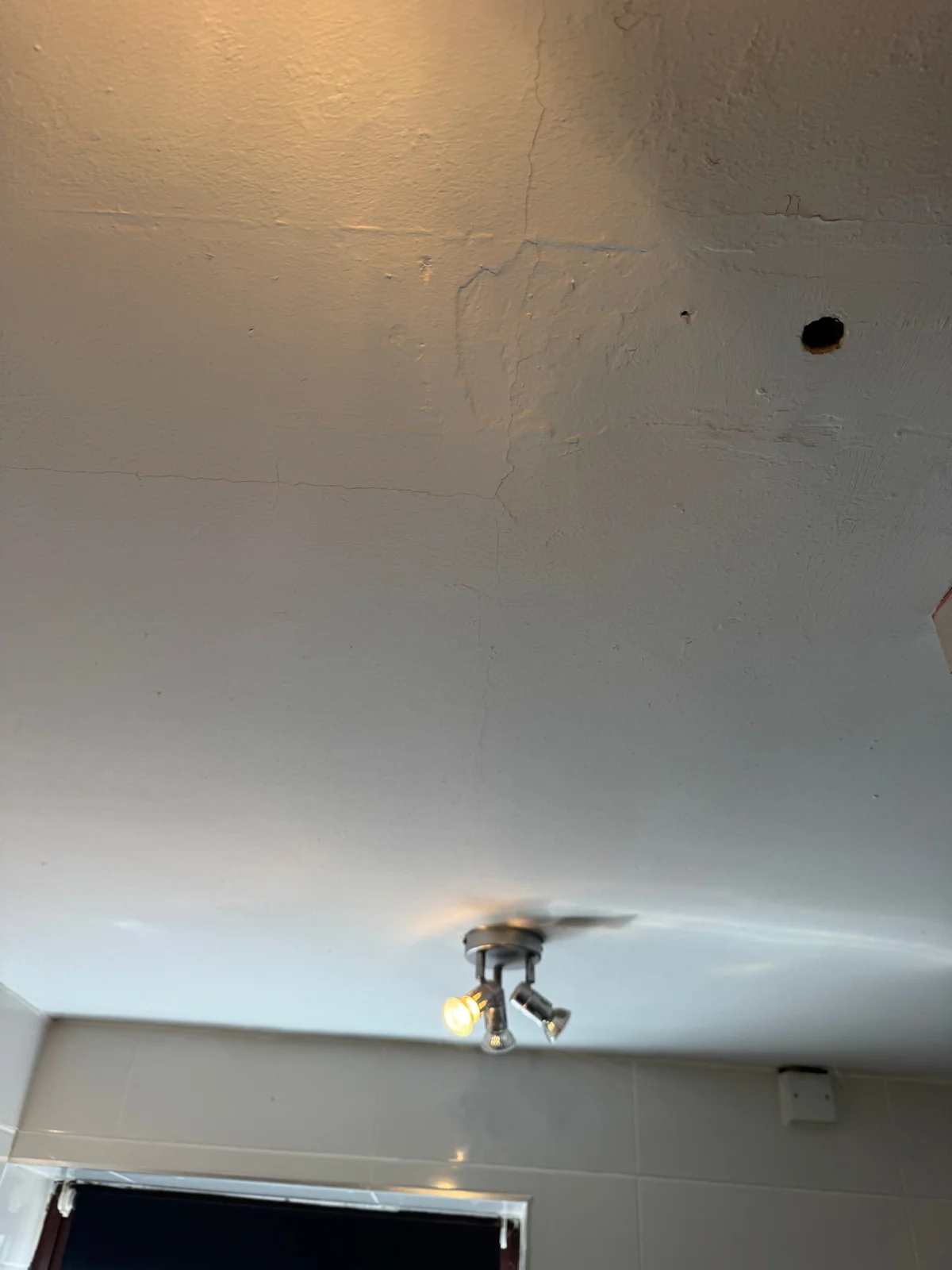
Cracking and local flaking affect this painted ceiling. Keep the decoration, plaster and background as separate layers when describing what is visible.
Survey archive photograph · View larger image
Turn the findings into a repair brief
Before specifying removal, record what should be retained. Define the affected layer, extent, purpose of the repair and acceptable appearance at adjoining finishes. Then obtain a proposed preparation, repair and decoration system tied to the evidence.
The brief should explain why each material suits its background, how moisture or movement questions will be resolved, how drying will be assessed and what trial area will establish. Agree which findings would stop work and require reassessment. If the exposed construction differs from the assumed build-up, the specification needs review.
Old lead-containing paint can remain beneath newer coats; preparation and stripping can create exposure. HSE's guidance requires assessment and controls appropriate to the work. Combine that enquiry with asbestos information where relevant before disturbance. These guides do not provide a sampling or removal method. [PF09–PF10]
Why “skim and paint tomorrow” is an incomplete repair
Hypothetical example PF-01. Green paint flakes around a pink patch beside cream-coloured plaster on an older solid wall. Other paint remains intact. A pipe repair is reported three months earlier; the wall behind a cupboard has not been seen. A proposal is to PVA the whole wall, skim it and apply washable paint the next day.
Work through the decision
First locate the separation: paint only, fine plaster or the deeper build-up? Pink and cream do not establish binder identity. A report that the pipe was repaired does not establish present moisture condition, and covering the accessible part does not resolve the concealed area.
Retain sound or significant finishes where appropriate, then obtain a preparation and coating system compatible with the identified background. Agree how drying and a trial area will be assessed. This is neither a blanket ban on PVA or gypsum nor approval of this proposal: product suitability and the existing layers must justify the specification. [PF03–PF05, PF08]
Check the work's wider consequences
For England, use the official Approved Document B portal when the proposed lining work raises fire-performance questions, and the Approved Document L portal when work may affect a thermal element. Establish building use, work scope, applicable edition and transitional position first. Assess the proposed work before deciding which requirements apply. [PF12–PF13]
For listed buildings in England, Historic England distinguishes compatible minor plaster repairs from work affecting special interest. Removing plaster to expose masonry and work to sensitive decorative features can raise different consent questions. Establish significance and consult the relevant conservation team before deciding what can change. Other nations have their own regimes. [PF11]
For the supporting construction, return to walls and ceilings. Use moisture investigation where recurring staining or wetting needs a wider enquiry.
For finishes that add another assembly over the wall, compare wall tiling and interior panelling. The material, weight, background and joints matter as well as the finished appearance.